Proper storage is one of the most overlooked aspects of working with psilocybin mushrooms. People spend time selecting the right strain, calibrating their dose, and preparing their set and setting, then store their mushrooms in a plastic bag on a kitchen counter and wonder why their next experience felt weaker than the first. Psilocybin degrades when exposed to heat, moisture, light, and oxygen. Understanding which of these is most damaging, and how to protect against each, makes the difference between mushrooms that remain potent for months and ones that lose meaningful potency in weeks.
The Main Enemies of Psilocybin Potency
Moisture
Moisture is the primary threat to dried mushrooms. Even mushrooms that appear thoroughly dry often retain some residual water content. When stored in a sealed container without a desiccant, that moisture accumulates, creates conditions for mould, and accelerates the breakdown of psilocybin and psilocin. Visible mould is an obvious sign of poor storage, but potency loss from moisture happens well before mould becomes apparent. The mushrooms may look and smell fine while their active compound content has already degraded significantly.
Heat
Psilocybin is sensitive to sustained heat. Room temperature storage, roughly 18 to 22 degrees Celsius, is acceptable for short periods, but anything warmer accelerates degradation. Kitchens and bathrooms are particularly poor storage locations due to temperature fluctuations from cooking and showering. A cool, stable environment, such as a dark cupboard in an interior room, is significantly better than a warm or temperature-variable space.
Light
UV light breaks down psilocybin over time. Direct sunlight is the most damaging, but indirect light exposure over extended periods also contributes to potency loss. Opaque containers eliminate this variable entirely and cost nothing extra to use.


Oxygen
Oxidation degrades psilocybin slowly but meaningfully over time. Minimising the amount of air in a storage container, and limiting how often you open it, slows this process. Vacuum sealing is the most effective method for long-term storage but requires equipment most people do not have at home. Airtight glass jars with a reliable seal are a practical alternative.
Short-Term Storage: Up to One Month
For mushrooms you plan to use within a month, the requirements are straightforward. Store in an airtight container, keep it in a cool dark location, and include a food-grade desiccant packet to absorb residual moisture. Small silica gel packets, the kind found in vitamin bottles and shoe boxes, work well and can be dried out and reused.
Glass is preferable to plastic for the container. Plastic can absorb odours and is more permeable to air over time. A mason jar with a tight-fitting lid is one of the most reliable and cost-effective short-term storage options available.
Avoid storing mushrooms in the refrigerator for short-term use. The humidity inside a fridge, particularly when the door is opened regularly, introduces moisture that works against you without providing meaningful temperature benefit at this timescale.
Medium-Term Storage: One to Six Months
For storage beyond a month, a few additional steps make a meaningful difference. First, ensure the mushrooms are as dry as possible before sealing. If there is any doubt about dryness, spread them on a clean surface with airflow for several hours before storing. Mushrooms that snap cleanly rather than bending are properly dried. Ones that bend or feel leathery still contain too much moisture.
Second, use desiccant packets generously. One small packet per jar is a minimum. Two is better, particularly in humid climates or during summer months. Third, store the sealed container in a cool, dark location. A drawer or cupboard away from heat sources is ideal. Consistent temperature matters more than achieving a specific low temperature.
At this timescale, potency should remain largely stable if the above conditions are met. Some minor degradation is normal over several months, but well-stored mushrooms should retain the majority of their original potency through six months of medium-term storage.
Long-Term Storage: Six Months and Beyond
For storage beyond six months, freezing is the most effective method available to most people. Psilocybin is stable at freezing temperatures, and a properly prepared frozen sample can remain potent for a year or more. The key preparation step before freezing is ensuring the mushrooms are completely dry. Any residual moisture will form ice crystals that rupture cell walls and introduce moisture damage during thawing. Mushrooms that are not fully dry before freezing will emerge from the freezer in poor condition.
To freeze correctly: dry thoroughly, seal in an airtight container with desiccant, and place in the freezer. When retrieving mushrooms from the freezer, allow the container to come fully to room temperature before opening. Opening a cold container exposes it to warm air, which causes condensation inside the jar, defeating the purpose of the desiccant. Avoid repeated freeze-thaw cycles. Remove what you need for a session, seal the container, and return it to the freezer promptly. Each thaw cycle introduces some risk of moisture exposure.
Storing Different Formats
Dried Mushrooms
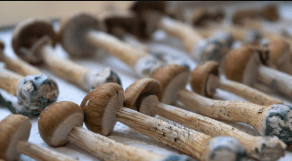
Dried whole mushrooms and ground mushroom powder follow the same principles outlined above. Powder has a higher surface area exposed to air and moisture, which makes it slightly more vulnerable to degradation than whole mushrooms at the same level of dryness. If storing powder, err toward smaller containers that minimise the air-to-product ratio inside the jar.
For those sourcing dried magic mushrooms online, products typically arrive in sealed packaging. Transfer to an airtight glass container with desiccant as soon as possible if you are not using the product immediately.
Edibles
Shroom edibles have their own storage requirements that differ from dried mushrooms in important ways. Chocolates are sensitive to heat and will bloom or melt at temperatures above roughly 21 degrees Celsius. Store chocolate products in a cool location, ideally below 18 degrees, away from direct light. Refrigeration is acceptable for chocolate if the product is sealed to prevent moisture absorption and odour transfer from other food.
Gummies are more tolerant of temperature variation than chocolate but should still be kept away from heat and direct sunlight, both of which accelerate degradation of the psilocybin content and the gummy texture itself. Store in a sealed container rather than the original open packaging once you have broken the seal. Those exploring the range of shroom edibles available in Canada will find that most products include best-before dates based on optimal storage conditions. Storing below these conditions shortens effective shelf life meaningfully.
Capsules
Capsules are among the most storage-stable psilocybin formats because the capsule shell provides an additional barrier against moisture and oxygen exposure. Store in the original sealed container or transfer to an airtight glass jar with desiccant. Keep away from heat and light. Capsules stored correctly should remain stable for six to twelve months without significant potency loss.
Teas
Pre-prepared mushroom teas in sachet or powder form should be kept sealed until use and stored in a cool, dry location away from light. Moisture is particularly damaging to powdered tea products because it can cause clumping and accelerate breakdown of both the psilocybin content and any flavouring compounds. Store unused portions in a sealed container with desiccant and use within the timeframe indicated on the packaging.
See also: Does Cbd Constipate You
Signs of Degradation to Watch For
Visible mould is the clearest sign that mushrooms have been stored incorrectly and should be discarded. Mould may appear as white, grey, green, or black fuzzy growth on the surface of the mushrooms. Do not attempt to remove mould and use the remaining material.
A musty or off smell is another indicator of moisture damage or mould development, even when no visible growth is present. Well-stored dried mushrooms should smell earthy and dry, not musty or sour.
Potency loss without visible degradation is harder to detect in advance. If mushrooms that were previously effective at a given dose feel noticeably weaker, poor storage is the most likely explanation after ruling out tolerance.
Sourcing and Storage Together
Storage quality matters most when you are buying in larger quantities to take advantage of better pricing per gram. For those in the GTA, shroom delivery in Scarborough and the broader Toronto area makes it practical to order what you need when you need it, which reduces the storage burden considerably. Ordering smaller quantities more frequently is a reasonable alternative to bulk storage if you do not have ideal storage conditions at home.
Final Thoughts
Good storage is straightforward once you understand what you are protecting against. An airtight glass container, a food-grade desiccant packet, and a cool dark location will keep most people’s mushrooms in good condition for months. For longer timelines, freezing with proper drying preparation extends that window considerably.
The investment in basic storage equipment is small relative to the cost of losing potency in a product you paid for and were counting on. Get the storage right before you need it, not after you notice something has gone wrong.
Frequently Asked Questions
How long do dried magic mushrooms last if stored correctly?
Properly dried mushrooms stored in an airtight container with desiccant in a cool, dark location will typically retain most of their potency for six to twelve months. Freezer storage can extend this to a year or more. Poorly stored mushrooms can lose significant potency in as little as a few weeks.
Can I store mushrooms in the refrigerator?
For short-term storage, the refrigerator introduces more risk than benefit due to humidity. For longer-term storage of chocolate edibles, refrigeration is reasonable if the product is properly sealed. For dried mushrooms, the freezer is a better long-term option than the refrigerator, provided the mushrooms are fully dry before freezing.
What is the best desiccant to use?
Food-grade silica gel packets are the most practical option for most people. They are inexpensive, reusable after drying in a low-temperature oven, and widely available. Calcium chloride desiccants are more aggressive moisture absorbers but are harder to find in food-safe grades. Avoid using non-food-safe desiccants in direct contact with anything you intend to consume.
Does grinding mushrooms into powder affect how long they last?
Ground mushroom powder has a higher surface area exposed to air and moisture, which makes it somewhat more susceptible to degradation than whole dried mushrooms stored under the same conditions. If you grind mushrooms in advance, store the powder in a small airtight container with desiccant and use it within a shorter timeframe than you would whole mushrooms.